The Dawn of AI-Powered Digital Art Creation
In the rapidly evolving landscape of digital creativity, artificial intelligence has emerged as a groundbreaking force that’s fundamentally reshaping how we approach digital illustration. What once required years of training and countless hours of meticulous work can now be accomplished through sophisticated AI algorithms that understand artistic principles, color theory, and compositional techniques with remarkable precision.
The integration of AI into digital illustration represents more than just technological advancement—it’s a paradigm shift that’s democratizing art creation while simultaneously pushing the boundaries of what’s possible in visual storytelling. From independent artists seeking to enhance their creative workflow to major studios looking to streamline production processes, AI-powered illustration tools are becoming indispensable assets in the modern creative toolkit.
Understanding AI-Driven Illustration Technologies
At its core, AI for digital illustration relies on sophisticated machine learning models, particularly generative adversarial networks (GANs) and diffusion models, which have been trained on vast datasets of existing artwork. These systems learn to recognize patterns, styles, and artistic conventions, enabling them to generate original illustrations based on textual descriptions or visual references.
The technology operates through several key mechanisms:
- Neural style transfer – Applies the artistic style of one image to the content of another
- Text-to-image generation – Creates visual content from written descriptions
- Image completion and enhancement – Fills in missing elements or improves existing artwork
- Style interpolation – Blends multiple artistic styles to create unique visual approaches
Popular AI Illustration Platforms and Tools
The market has witnessed an explosion of AI-powered illustration tools, each offering unique capabilities and targeting different aspects of the creative process. DALL-E 2 and Midjourney have gained significant attention for their ability to generate highly detailed illustrations from simple text prompts, while tools like Stable Diffusion offer open-source alternatives that provide greater customization options.
Professional-grade platforms such as Adobe Firefly integrate seamlessly with existing creative workflows, allowing artists to incorporate AI-generated elements into their traditional illustration processes. Meanwhile, specialized tools like Artbreeder focus on collaborative creation, enabling users to blend and evolve illustrations through community-driven genetic algorithms.
Transforming Creative Workflows and Productivity
One of the most significant impacts of AI in digital illustration is its ability to dramatically accelerate the creative process. Traditional illustration workflows that once required days or weeks can now be compressed into hours or minutes, allowing artists to explore multiple concepts rapidly and iterate on ideas with unprecedented speed.
The technology excels particularly in the conceptual phase of illustration projects, where artists can quickly generate dozens of variations on a theme, exploring different compositions, color schemes, and stylistic approaches before committing to a final direction. This capability has proven invaluable in commercial settings where tight deadlines and client revisions are common challenges.
Enhancing Rather Than Replacing Human Creativity
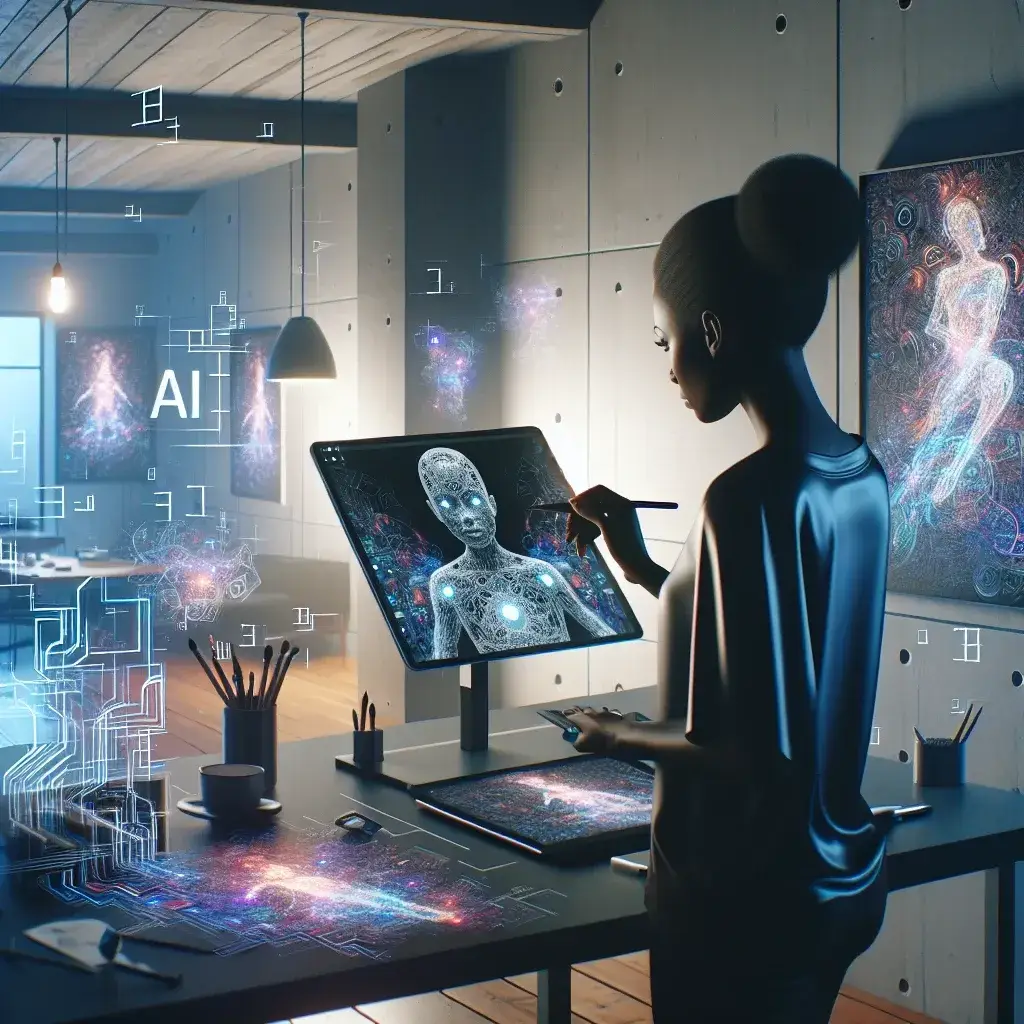
Contrary to fears about AI replacing human artists, the most successful implementations of AI illustration tools focus on augmentation rather than automation. Professional illustrators are finding that AI serves as an incredibly powerful assistant, handling time-consuming tasks like background generation, texture creation, and initial concept exploration while leaving the crucial elements of artistic vision, emotional expression, and narrative development firmly in human hands.
This collaborative approach has led to the emergence of new creative methodologies where artists use AI as a starting point for their work, refining and personalizing AI-generated content to match their unique artistic voice and project requirements.
Technical Capabilities and Artistic Applications
Modern AI illustration systems demonstrate remarkable versatility across various artistic styles and applications. From photorealistic portraits to abstract expressionist compositions, these tools can adapt to virtually any visual aesthetic while maintaining consistency and quality throughout the creative process.
Style Adaptation and Customization
Advanced AI systems allow users to train custom models on specific artistic styles or brand guidelines, ensuring that generated illustrations maintain visual consistency across projects. This capability has proven particularly valuable for:
- Brand illustration – Maintaining consistent visual identity across marketing materials
- Editorial illustration – Quickly generating accompanying visuals for articles and publications
- Concept art – Rapidly prototyping visual ideas for games, films, and other media
- Educational materials – Creating engaging visuals for learning resources
Industry Impact and Market Transformation
The introduction of AI-powered illustration tools has created significant ripple effects throughout the creative industry. Publishing houses, advertising agencies, and entertainment companies are increasingly incorporating these technologies into their production pipelines, leading to faster turnaround times and reduced costs for illustration projects.
However, this transformation has also raised important questions about intellectual property, artistic authenticity, and the economic impact on professional illustrators. The industry is still grappling with establishing ethical guidelines and fair compensation models that acknowledge both the value of AI technology and the irreplaceable contribution of human creativity.
Emerging Business Models and Opportunities
The AI illustration revolution has spawned entirely new business models and career opportunities. AI art directors specialize in crafting effective prompts and guiding AI systems to produce desired results, while AI illustration consultants help traditional studios integrate these technologies into existing workflows.
Freelance illustrators are discovering that mastery of AI tools can significantly expand their service offerings, allowing them to take on larger projects and serve clients with varying budget constraints more effectively.
Quality, Consistency, and Creative Control
One of the most impressive aspects of modern AI illustration systems is their ability to maintain high quality and consistency across generated artwork. Unlike human artists who may experience variations in performance due to fatigue or other factors, AI systems can produce consistently high-quality output while adhering to specific style guidelines and technical requirements.
The level of creative control available to users has also evolved significantly. Modern platforms offer sophisticated parameter controls that allow artists to fine-tune everything from color palettes and lighting conditions to compositional elements and stylistic details.
Overcoming Technical Limitations
While AI illustration technology has made remarkable progress, certain limitations remain. Complex scenes with multiple characters, intricate architectural details, and specific cultural or historical references can still pose challenges for AI systems. However, ongoing research and development continue to address these limitations, with new models demonstrating improved understanding of spatial relationships, object interactions, and contextual accuracy.
Future Prospects and Technological Evolution
The future of AI in digital illustration appears incredibly promising, with several exciting developments on the horizon. Real-time generation capabilities are becoming more sophisticated, potentially enabling interactive illustration experiences where artwork responds dynamically to user input or environmental factors.
Integration with virtual and augmented reality platforms is opening new frontiers for immersive illustration experiences, while advances in 3D AI generation are beginning to blur the lines between traditional 2D illustration and three-dimensional art creation.
Collaborative AI and Human-Machine Partnerships
Future AI illustration systems are likely to become even more collaborative, with improved understanding of artistic intent and better integration with human creative processes. These systems may eventually serve as true creative partners, offering suggestions, identifying potential improvements, and helping artists explore creative directions they might not have considered independently.
Ethical Considerations and Responsible Development
As AI illustration technology continues to advance, the creative community faces important ethical considerations regarding its development and deployment. Issues of training data consent, artist attribution, and fair compensation require ongoing attention and collaborative solutions from technology developers, artists, and industry stakeholders.
The establishment of clear guidelines for ethical AI use in creative contexts will be crucial for ensuring that these powerful tools enhance rather than exploit the creative community while fostering innovation and artistic expression.
Conclusion: Embracing the AI-Powered Creative Future
AI for creating digital illustrations represents a transformative force that’s reshaping the creative landscape in profound and exciting ways. Rather than replacing human creativity, these technologies are amplifying artistic capabilities, democratizing access to high-quality illustration tools, and opening new possibilities for creative expression.
As we move forward, the most successful artists and creative professionals will likely be those who embrace AI as a powerful ally in their creative journey, using these tools to enhance their unique artistic vision while maintaining the human elements that make art truly meaningful and emotionally resonant. The future of digital illustration lies not in the dominance of either human or artificial intelligence, but in their collaborative partnership to create visual experiences that neither could achieve alone.