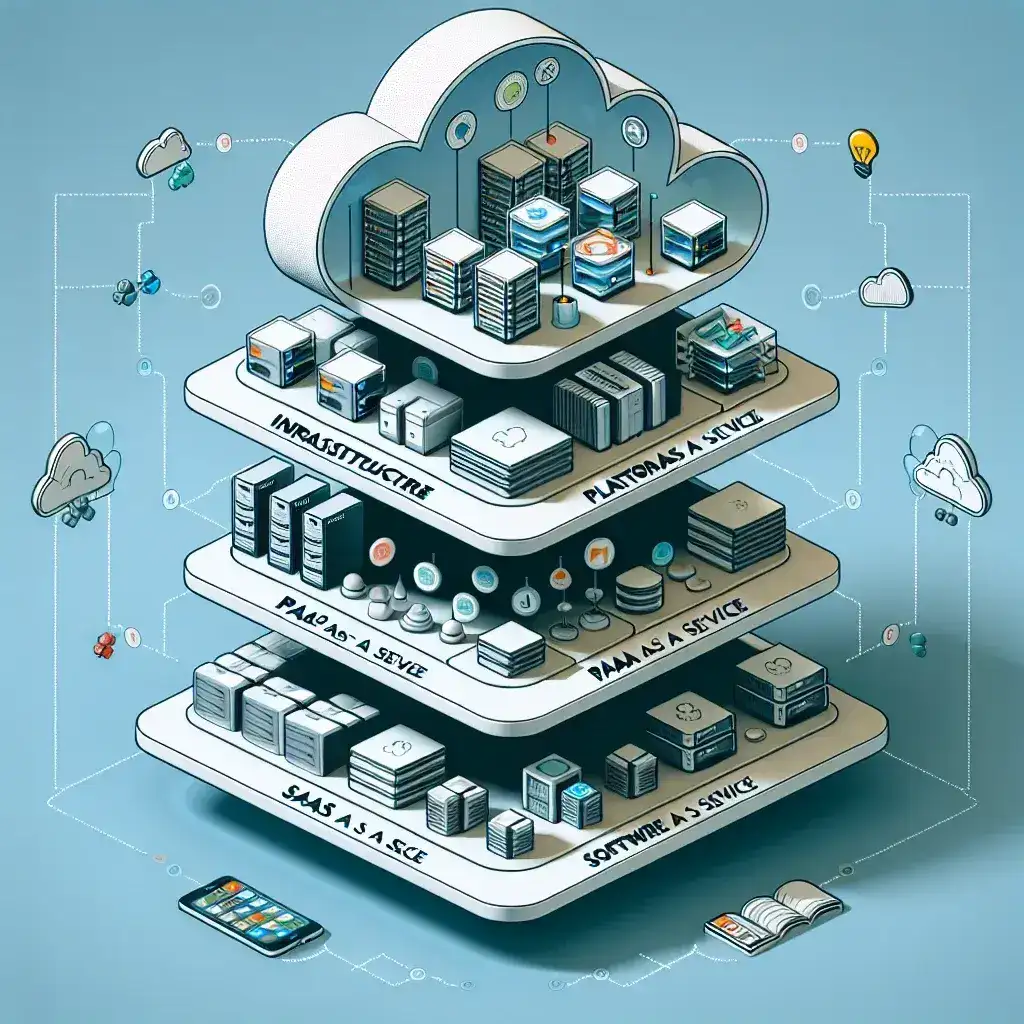
The rapid advancement of technology has made cloud computing an indispensable component for businesses worldwide. Among the various aspects of cloud computing, understanding the core service models is crucial. The three primary cloud service models are Infrastructure as a Service (IaaS), Platform as a Service (PaaS), and Software as a Service (SaaS). Each of these models offers unique features and benefits, catering to different business needs and operational criteria.
Overview of Cloud Service Models
Cloud service models are categorized based on the range and type of services they provide. Here’s a brief overview of the three main models:
| Service Model | Description | Examples |
|---|---|---|
| Infrastructure as a Service (IaaS) | Provides virtualized computing resources over the internet. | Amazon Web Services (AWS), Microsoft Azure, Google Cloud Platform |
| Platform as a Service (PaaS) | Delivers hardware and software tools over the internet, usually for application development. | Heroku, Google App Engine, Microsoft Azure |
| Software as a Service (SaaS) | Offers software applications over the internet on a subscription basis. | Google Workspace, Microsoft Office 365, Salesforce |
Detailed Analysis of IaaS
What is IaaS?
Infrastructure as a Service (IaaS) is a cloud computing model that offers virtualized physical computing resources over the internet. With IaaS, businesses can manage their infrastructure more efficiently and cost-effectively, as the service provider handles the underlying physical infrastructure, including servers, storage, and networking hardware.
Benefits of IaaS
- Cost Efficiency: Eliminates the need for significant capital expenditure on hardware.
- Scalability: Easily scales resources up or down based on demand.
- Flexibility: Provides the flexibility to select and configure operating systems, storage, and hardware according to requirements.
- Disaster Recovery: Improve disaster recovery capabilities with off-site infrastructure.
Use Cases of IaaS
IaaS is ideal for businesses that require:
- Development and testing environments.
- Highly scalable websites and web apps.
- High-performance computing (HPC) tasks.
- Big data analysis.
- Disaster recovery solutions.
Detailed Analysis of PaaS
What is PaaS?
Platform as a Service (PaaS) is a cloud computing model that provides hardware and software tools over the internet. These tools are typically needed for application development. PaaS is designed to help developers and organizations focus on writing code and developing applications without worrying about managing the underlying infrastructure.
Benefits of PaaS
- Simplified Development: Provides a robust backend infrastructure, allowing developers to focus solely on coding and innovation.
- Rapid Development and Deployment: Speeds up the application development lifecycle with immediate access to a pre-configured development environment.
- Cost-Effective: Reduces the need to invest in expensive hardware and software.
- Support for Diverse Programming Languages: Offers support for various programming languages and frameworks.
Use Cases of PaaS
PaaS is suitable for businesses needing:
- Rapid application development and deployment.
- APIs and microservices development.
- Data management solutions.
- Advanced data analytics.
- IoT applications development.
Detailed Analysis of SaaS
What is SaaS?
Software as a Service (SaaS) is a cloud computing model that delivers software applications over the internet on a subscription basis. SaaS applications are accessed via web browsers, minimizing the need for substantial on-site hardware and maintenance.
Benefits of SaaS
- Accessibility: Applications are accessible from any device with internet connectivity.
- Maintenance and Updates: The service provider handles all maintenance and updates, ensuring seamless user experience.
- Cost-Effective: Reduces the need for large up-front investments and on-site hardware.
- Scalability: Easily scalable to accommodate growth and changing business needs.
Use Cases of SaaS
SaaS is optimal for businesses needing:
- Email and collaboration tools.
- Customer Relationship Management (CRM) software.
- Enterprise Resource Planning (ERP) systems.
- Content Management Systems (CMS).
- Project Management tools.
Comparative Analysis
To better understand how IaaS, PaaS, and SaaS differ, let’s compare them based on some key parameters.
| Parameter | IaaS | PaaS | SaaS |
|---|---|---|---|
| Control | High control over the infrastructure. | Medium control, mainly over applications and data. | Low control, mainly focuses on using the application. |
| Customization | Highly customizable. | Moderately customizable. | Limited customization. |
| Maintenance | User is responsible for most maintenance tasks. | Service provider handles platform-related maintenance. | Service provider handles all maintenance. |
| Target Users | IT administrators and network architects. | Developers and application testers. | End-users and businesses needing software applications. |
Conclusion
Understanding the differences between IaaS, PaaS, and SaaS is critical for businesses evaluating their cloud computing needs. Each service model offers unique benefits and is designed to address specific business requirements. Whether you need robust infrastructure management with IaaS, streamlined application development with PaaS, or ready-to-use applications with SaaS, choosing the right cloud service model can significantly impact your operational efficiency and success.